
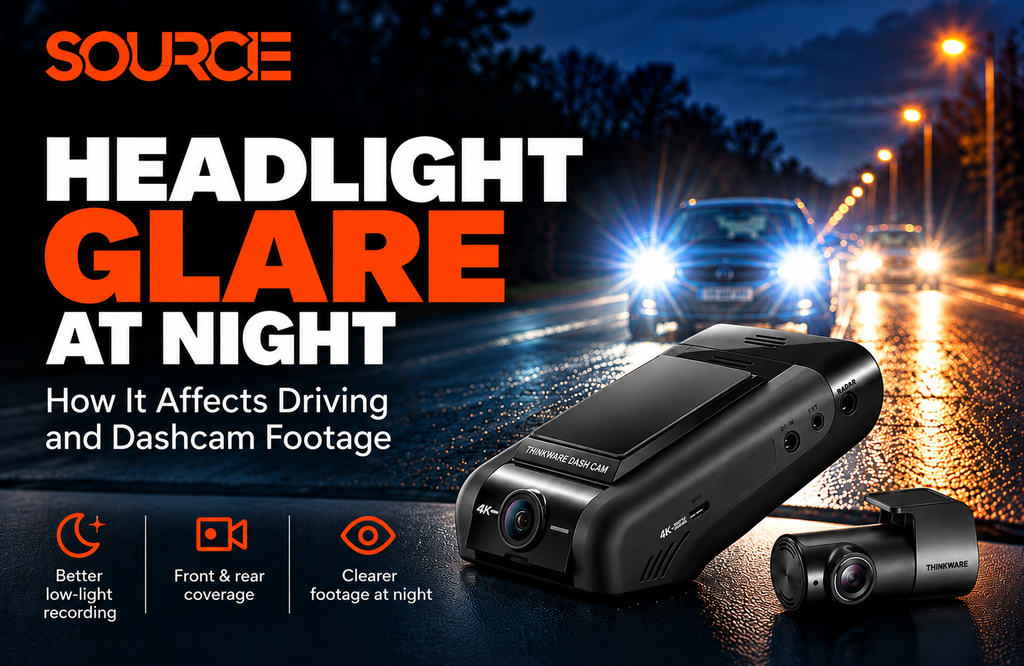
As the evenings get darker, many UK drivers face the same problem on their daily commute: headlight glare.
Modern vehicles can have powerful headlights, while busy roads mean drivers are regularly exposed to bright beams from oncoming traffic and vehicles behind them. Add wet roads, poor weather and an already dark journey, and visibility can become more challenging.
For drivers, the issue is not simply uncomfortable brightness. Glare can make it harder to see the road, recognise hazards and react confidently.
It also raises another question for drivers considering a dashcam: does headlight glare affect the quality of footage captured at night?
A good dashcam cannot remove glare from the road, but choosing a system with appropriate image quality and low-light performance can make a difference when recording what happens during a darker journey.
What is headlight glare?
Headlight glare occurs when bright vehicle lights make it more difficult for your eyes to see clearly.
It is particularly noticeable after dark when your eyes are adapted to lower light levels. A sudden beam from an approaching vehicle can temporarily make other objects around the road harder to distinguish.
Glare can come from:
- Oncoming headlights
- Bright LED headlights
- Vehicles following closely behind
- Reflections from wet roads
- Poorly adjusted headlights
- High beams used at inappropriate times
- Reflections from mirrors or other vehicle surfaces
The effect can be more noticeable on unlit roads, where there is less ambient lighting.
Why are headlights so difficult to deal with at night?
Headlights are designed to illuminate the road ahead, but modern lighting technology can produce a very bright beam.
LED and other high-intensity lighting systems can appear particularly harsh when viewed directly. The situation can become worse when a vehicle approaches over a crest or around a bend, because the lights can suddenly enter your field of vision.
Weather can also play a part.
Rain, mist and wet road surfaces can reflect and scatter light. Instead of simply seeing the road ahead, drivers may also see reflections across the windscreen and road surface.
This combination can make headlight glare at night particularly distracting during the winter months.
How does headlight glare affect driving?
The biggest concern is reduced visibility.
When a bright light enters your vision, it can temporarily make it harder to see objects around the source of the light. This can be particularly important when looking for:
- Pedestrians
- Cyclists
- Road signs
- Junctions
- Lane markings
- Vehicles without strong lighting
- Hazards on poorly lit roads
Drivers should avoid staring directly at approaching headlights and should continue to concentrate on their own lane and the road ahead.
Keeping the windscreen clean inside and out can also help. Smears and dirt can scatter light and make bright headlights appear even more distracting.
If you regularly experience headlight glare when driving, maintaining your vehicle and keeping your windscreen clean are simple steps that can help improve visibility.
How can you reduce glare when driving at night?
You cannot control the headlights of other vehicles, but there are several practical things you can do.
Keep your windscreen clean
A dirty or greasy windscreen can make reflections and bright lights more noticeable.
Clean both sides of the glass regularly, particularly during winter when roads are often wet and dirty.
Check your mirrors
If a vehicle behind you is causing uncomfortable brightness through its headlights, adjust your mirrors correctly. Many vehicles also have an anti-dazzle setting on the rear-view mirror.
Avoid looking directly into headlights
When an approaching vehicle has particularly bright lights, avoid focusing directly on them. Keep your attention on your lane and use the road markings to maintain your position.
Slow down when visibility is reduced
If darkness, rain or dazzling headlights are making visibility more difficult, reducing your speed can give you more time to identify and respond to hazards.
Keep your own lights correctly maintained
Headlights should be clean, correctly aligned and functioning properly. Misaligned headlights can affect both your visibility and other road users.
Does headlight glare affect dashcam footage?
This is where the issue becomes particularly relevant for dashcam owners.
Your eyes and a dashcam camera sensor do not see the road in exactly the same way. A camera has to deal with significant differences between dark areas and very bright light sources.
For example, imagine driving along a dark road when a vehicle approaches with powerful headlights. The camera needs to capture the road, surrounding vehicles and other details while also dealing with an intense light source.
This is why dashcam footage at night can vary significantly between different cameras.
A cheaper camera may struggle to retain useful detail in very dark areas or around bright lights. Image quality can also be affected by exposure, sensor performance, lens quality, weather and the amount of available road lighting.
A dashcam therefore should not be selected simply because it records in high resolution during daylight.
What should you look for in a dashcam for night driving?
If most of your driving takes place during darker commutes, consider the camera’s overall performance rather than focusing on one specification.
Important considerations include:
Low-light performance
A camera should be capable of recording useful detail when there is limited ambient light.
Image processing
Modern dashcams use image processing to handle different lighting conditions. This can help the camera balance brighter and darker areas within a scene.
High-quality recording
Higher resolution can provide more detail, but resolution alone does not guarantee better footage. The sensor, lens and image processing also matter.
Front and rear coverage
A two-channel system can provide additional context by recording both the road ahead and what is happening behind the vehicle.
Reliable recording
A dashcam needs to record consistently throughout the journey. Features such as automatic recording and suitable storage capacity are important for everyday use.
Why does low-light recording matter for evidence?
A dashcam is not just useful for recording scenic drives. Its main value can be having a record of what happened during an incident.
If an incident occurs after dark, low-light footage needs to contain enough useful information to help understand the circumstances.
That could include the position and movement of vehicles, road conditions, traffic signals or other relevant details.
No dashcam can guarantee that every incident will be captured perfectly. However, selecting a quality system designed for demanding lighting conditions can give drivers greater confidence in their recordings.
Are Thinkware dashcams suitable for darker commutes?
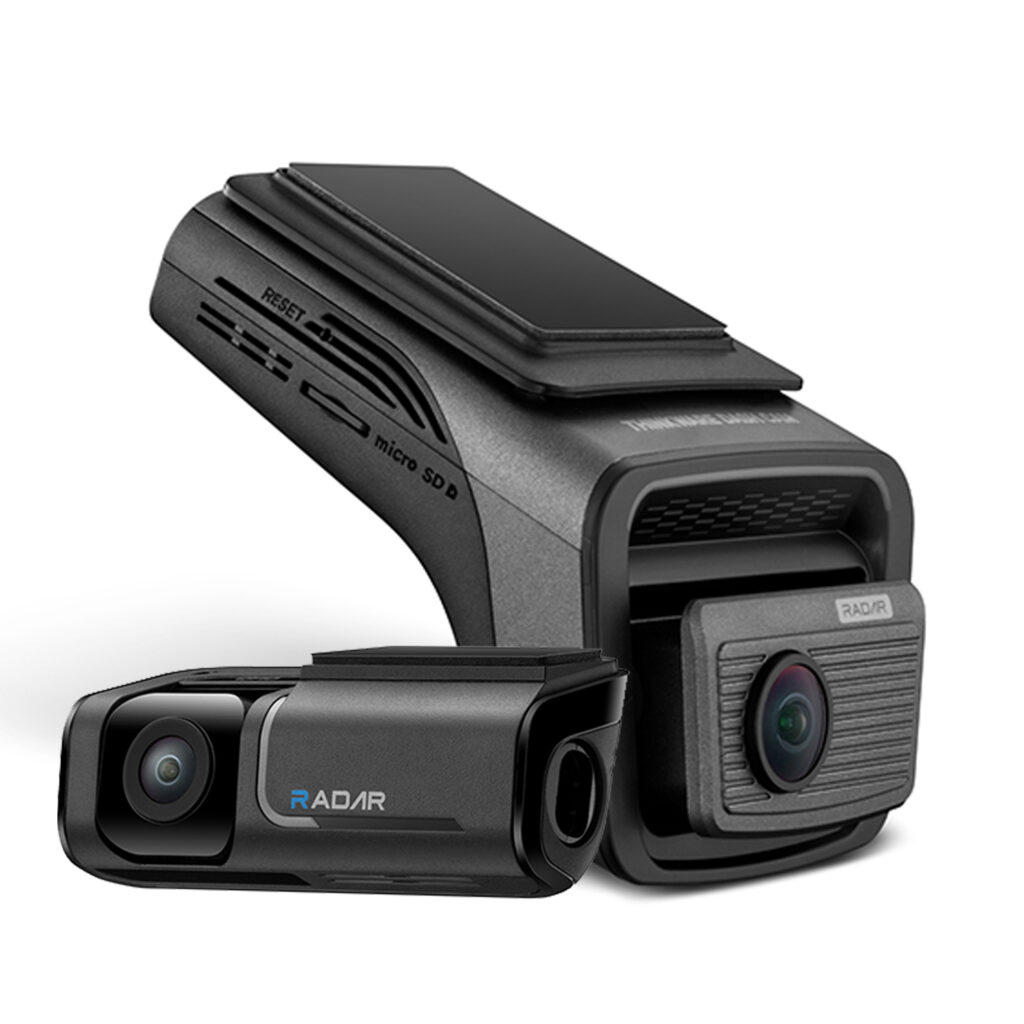
Thinkware offers a range of dashcams designed for everyday driving, including systems with front and rear recording options.
For drivers looking for a Thinkware dashcam for regular night-time journeys, the important consideration is choosing a model that matches their vehicle, driving requirements and desired level of recording coverage.
Professional installation can also help ensure the system is positioned correctly and integrated neatly into the vehicle.
If you are based in Sheffield and considering a Thinkware system, you can explore Thinkware dashcam installation in Sheffield or view the available Thinkware dashcam fitted prices.
Frequently Asked Questions
Modern vehicles can use powerful lighting technologies that produce a bright beam. The contrast between these headlights and a dark road can make them appear particularly intense.
Keep your windscreen clean, use your mirrors correctly, avoid staring directly into approaching headlights and reduce your speed when visibility is affected.
It can. Bright light sources can create challenging conditions for a camera sensor, particularly when the surrounding scene is dark. Camera quality, sensor performance, exposure and image processing can all influence the resulting footage.
Yes, many modern dashcams are designed to record in low-light conditions. However, results vary between models and conditions. Weather, road lighting, vehicle headlights and camera specifications can all affect night-time footage.
Look at low-light performance, image quality, image processing, recording coverage and reliability rather than focusing solely on resolution.
Prepare for darker commutes
As the clocks go back and evenings become darker, headlight glare is likely to become a familiar part of the daily journey for many drivers.
You cannot control the lighting used by other vehicles, but you can make sure your own vehicle, driving habits and dashcam are prepared for the conditions.
For drivers looking for additional protection and reliable recording during darker journeys, a quality Thinkware system can provide an extra layer of confidence when travelling after dark.
Explore Source Sounds‘ Thinkware dashcam fitted options and find a system suitable for your vehicle and driving needs.