
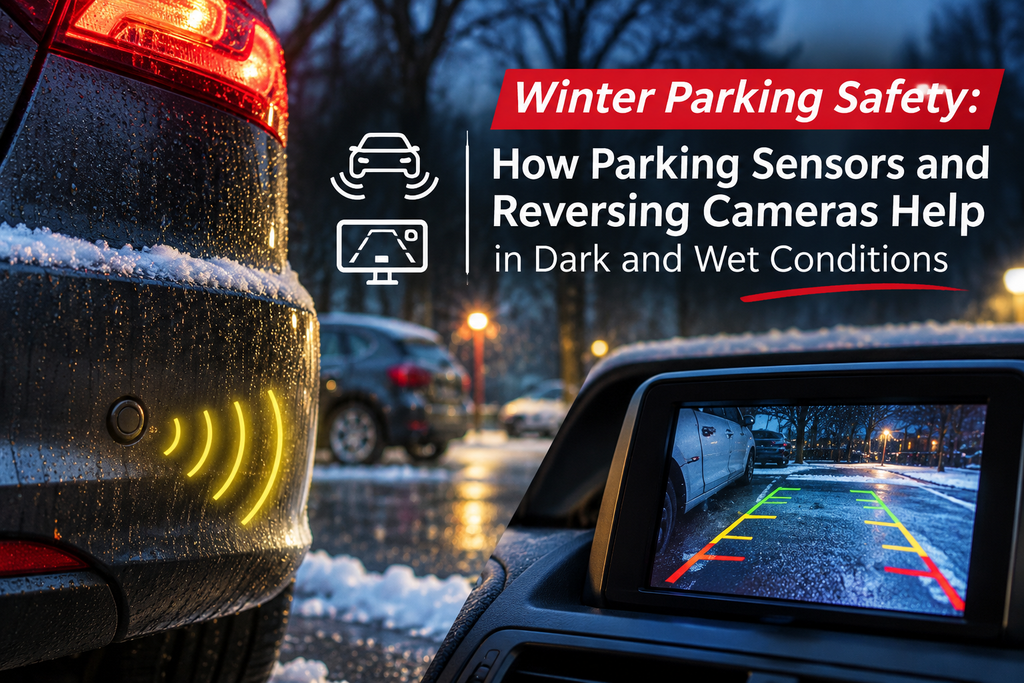
Winter can make parking more difficult than usual. Dark evenings, heavy rain and wet windscreens can make it harder to judge distances when reversing into a driveway or squeezing into a tight parking space. Even a familiar parking spot can become awkward when visibility is poor.
If your car does not have parking assistance, you may find yourself relying entirely on your mirrors and judgement. This is where parking sensors and reversing cameras can help. Both systems assist with low-speed manoeuvres, but they work differently and offer distinct benefits.
So, should you choose parking sensors, a reversing camera or both? Understanding how each system works can help you decide which option suits your car and your everyday driving needs.
Why Is Winter Parking More Difficult?
Parking requires a clear view of your surroundings and a good sense of the space available. During winter, several everyday problems can make this harder.
- Darker evenings: Poorly lit driveways and car parks can make low walls, bollards and other obstacles difficult to see.
- Rain and road spray: Water and dirt on rear windows, mirrors and camera lenses can restrict visibility.
- Condensation and frost: A misted-up rear window can make reversing more challenging until it has cleared.
- Tight parking spaces: Narrow driveways and busy supermarket car parks leave less room to correct a manoeuvre.
- Slippery surfaces: Frost and ice require slower, more controlled movements, particularly when positioning your car close to another vehicle or a wall.
These conditions do not necessarily mean you need new equipment. However, if you regularly struggle to judge the space behind your car, it may be worth considering an upgrade.
How Do Parking Sensors Help When Reversing?
Parking sensors are designed to alert you when your vehicle approaches a detected obstacle. Most conventional systems use ultrasonic sensors fitted to the bumpers to estimate the distance between your car and nearby objects.
As you reverse, the system usually provides audible warnings that become more frequent as you get closer to an obstacle. Some systems also display visual alerts on a screen.
When are parking sensors useful?
Parking sensors can be particularly useful when:
- Reversing towards a garage door or wall.
- Parking close to another vehicle in a narrow space.
- Manoeuvring in a driveway with limited room behind the car.
- Judging the remaining distance when your rear view is restricted.
Their main advantage is that they provide warnings without requiring you to judge every distance visually. This can be useful when parking in familiar but poorly lit spaces during winter evenings.
However, parking sensors have limitations. Depending on the system, they may struggle to detect low, narrow or irregularly shaped objects. Dirt, snow or ice covering a sensor can also affect its performance.
Keep the sensors clean and pay attention to your surroundings rather than relying solely on the warning sounds.
How Do Reversing Cameras Help in Poor Visibility?
A reversing camera displays a live view of the area behind your car on a compatible screen. Depending on the system, the display may also include guidelines to help you judge the vehicle’s direction when reversing.
Unlike parking sensors, which provide proximity warnings, a camera lets you see visible objects behind the vehicle. This can make it easier to understand the layout of a parking space before continuing your manoeuvre.
When is a reversing camera useful?
A reversing camera may be particularly helpful when:
- Reversing into a narrow driveway with visible boundaries.
- Parking between two vehicles.
- Manoeuvring near obstacles that are difficult to see through the rear window.
- Aligning your car with a garage entrance or parking bay.
A camera can provide a useful additional view, but it cannot show everything behind your vehicle. Its field of view is limited, and its image may become unclear if the lens is covered in rain, road grime, frost or ice. Poor lighting can also affect image quality.
Before reversing, check that the camera lens is clean and the display provides a clear picture. Continue using your mirrors and checking your surroundings, particularly for pedestrians, children and pets.
Parking Sensors vs Reversing Cameras: Which Is Better?
The right choice depends on how you use your car and the situations in which you find parking difficult.
| Feature | Parking sensors | Reversing cameras |
| How they work | Provide audible or visual warnings about detected obstacles | Display a live view behind the vehicle |
| Main benefit | Help judge the distance to nearby obstacles | Help you see the space behind the car |
| Best suited to | Judging gaps close to walls and other vehicles | Viewing parking spaces and visible obstacles |
| Main limitation | May not detect every object reliably | Cannot show areas outside the camera’s view |
| Winter maintenance | Keep sensors free from dirt, snow and ice | Keep the camera lens clean and unobstructed |
Which should you choose? If you mainly want help judging how close your bumper is to an obstacle, parking sensors may be sufficient. If you prefer to see the area behind your car on a screen, a reversing camera may be more suitable.
Neither option is universally better. Your vehicle, parking environment and personal preferences should guide your decision.
Should You Install Both Parking Sensors and Reversing Cameras?
For drivers who regularly park in narrow spaces or poorly lit areas, combining parking sensors and reversing cameras can provide useful additional assistance.
The two systems complement each other. A reversing camera shows the visible area behind your car, while parking sensors provide warnings as you approach detected obstacles.
Imagine reversing into your driveway after work on a rainy evening. The camera may help you see the driveway entrance and any visible objects, while the sensors alert you as the rear bumper approaches a wall. Together, they provide different information to help you manoeuvre more carefully.
If you are considering an upgrade, think about the following:
- Your car: Check which aftermarket systems are compatible with your vehicle.
- Your parking habits: Consider whether you regularly use narrow driveways, garages or crowded car parks.
- Your preferred setup: Decide whether audible warnings, a screen display or both would suit you best.
- Installation requirements: Check where the equipment can be fitted and whether your car needs additional wiring or a compatible display.
A professional installer can advise you on suitable equipment and ensure the system is correctly fitted and tested.
Winter Parking Tips to Remember
Parking assistance can make manoeuvring easier, but good habits remain essential.
- Clear frost and condensation from your windows before driving.
- Keep your mirrors, parking sensors and camera lens clean.
- Reverse slowly and stop if you are unsure how much space remains.
- Check your surroundings before moving, including areas that may not be visible on the camera display.
- Allow extra care on icy or slippery surfaces.
- Never assume that a lack of sensor warnings means the area behind your car is clear.
These simple steps can help you make better use of your parking equipment throughout the colder months.
Frequently Asked Questions
Parking sensors provide proximity warnings, while reversing cameras show a visual view behind your car. The better option depends on your needs. Some drivers prefer one system, while others benefit from using both.
They may continue to operate, but dirt, snow and ice covering the sensors can affect performance. Certain obstacles may also go undetected, depending on the system and the object.
Yes, provided there is sufficient available light for the camera to produce a usable image. Performance varies between systems, and a dirty lens or poor lighting can reduce visibility.
Many older vehicles can be fitted with aftermarket parking sensors, reversing cameras or both. Compatibility depends on the vehicle and the equipment selected, so check the installation requirements before buying.
Not necessarily. Sensors may suit drivers who want distance warnings, while cameras provide a visual view of the area behind the car. If you regularly park in confined spaces, combining both is worth considering.
Find the Right Parking Upgrade for Your Car
Winter parking can be challenging, particularly when you are reversing into a dark driveway or manoeuvring in a busy car park. Parking sensors and reversing cameras offer different ways to make these situations easier to manage.
Whether you want the added reassurance of proximity warnings, a clearer view behind your car or a combination of both, choosing suitable equipment starts with understanding your vehicle and how you park.
Explore the parking assistance options available from Source Sounds and get in touch to discuss suitable parking sensor and reversing camera installations for your car.